



CYP2C9
CYP2C9 is a major cytochrome P450 enzyme in human liver and represents the most abundant functional member of the CYP2C subfamily, contributing substantially to phase I drug metabolism and xenobiotic clearance.[1][2] Mechanistically, CYP2C9 catalyzes the oxidation of numerous clinically important substrates, including S-warfarin, phenytoin, tolbutamide, diclofenac, celecoxib, and losartan, while also participating in the metabolism of endogenous compounds such as arachidonic acid and steroids.[2][3][4] Therefore, CYP2C9 serves as a critical regulator of drug exposure, pharmacokinetics, and metabolic homeostasis.[1][4] In disease-relevant settings, altered CYP2C9 activity is strongly associated with variability in anticoagulant response, phenytoin neurotoxicity, and adverse reactions to nonsteroidal anti-inflammatory drugs, making the enzyme a central target in pharmacogenomic studies and precision medicine models.[1][5][2] Compared with related CYP2C isoforms, including CYP2C8 and CYP2C19, CYP2C9 contributes a larger proportion of hepatic CYP2C-mediated drug metabolism and displays distinct substrate selectivity toward weakly acidic therapeutic compounds.[2][4][6] Genetic polymorphisms further distinguish CYP2C9 from related isoforms, as reduced-function alleles significantly modify metabolic capacity and influence dosing requirements for multiple therapeutic agents.[1][5] For experimental applications, selective inhibitors and inducers of CYP2C9 are widely used to investigate drug-drug interactions, enzyme regulation, substrate specificity, and metabolic liability during drug discovery and translational pharmacology studies.[2][4]
References:
- [1]. Izmailova ES, et al. Wearable Devices in Clinical Trials: Hype and Hypothesis. Clin Pharmacol Ther. 2018 Jul;104(1):42-52. [Content Brief]
- [2]. Rettie AE, et al. Clinical and toxicological relevance of CYP2C9: drug-drug interactions and pharmacogenetics. Annu Rev Pharmacol Toxicol. 2005;45:477-94. [Content Brief]
- [3]. Lin JH. Pharmacokinetics of biotech drugs: peptides, et al. Pharmacokinetics of biotech drugs: peptides, proteins and monoclonal antibodies. Curr Drug Metab. 2009 Sep;10(7):661-91. [Content Brief]
- [4]. Sangkuhl K, et al. PharmVar GeneFocus: CYP2C9. Clin Pharmacol Ther. 2021 Sep;110(3):662-676. [Content Brief]
- [5]. Zhou Y, et al. Global distribution of functionally important CYP2C9 alleles and their inferred metabolic consequences. Hum Genomics. 2023 Feb 28;17(1):15. [Content Brief]
- [6]. Database: Guide to pharmacology.
All Product Categories
-
CYP2C9 Related Products (18)
Related Products (18)

- 1
-
Oteseconazole
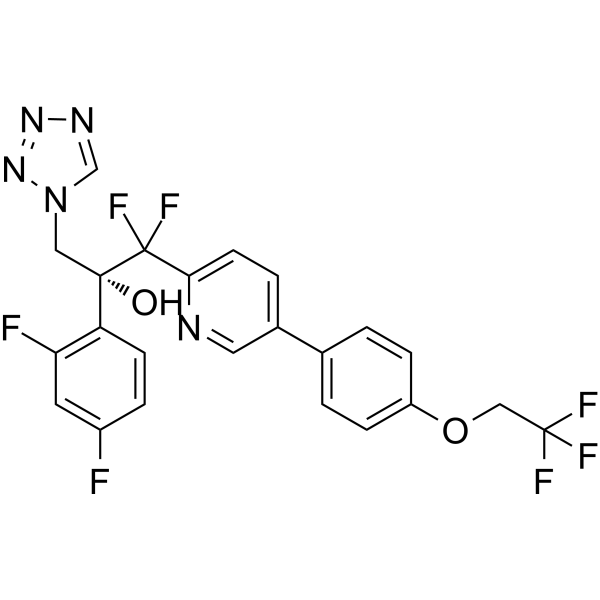 0 ImagesSynonyms: VT-1161
-
Piperlonguminine
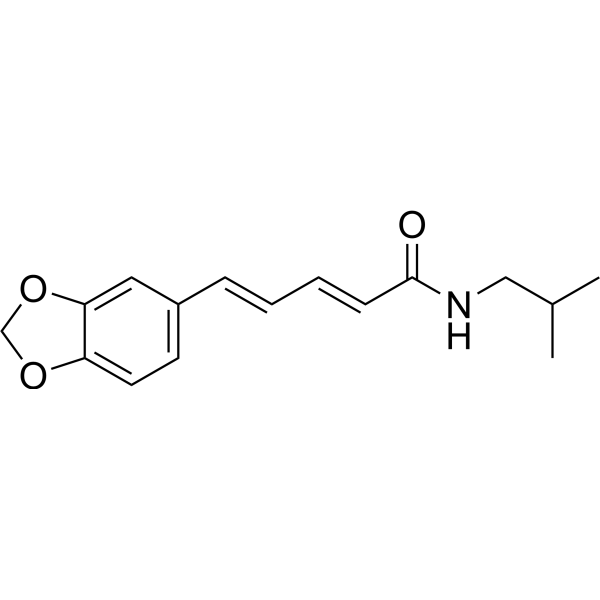 0 ImagesPiperlonguminine is a cytochrome P450 (CYP450) inhibitor. Piperlonguminine also inhibits the growth of epimastigotes and intracellular amastigotes of Trypanosoma cruzi, with IC50 values of 53.8 and 33.9 μM, respectively. Piperlonguminine regulates HMGB1/TLR4-NF-κB/MAPK-related inflammatory responses, endothelial protein C receptor (EPCR) shedding, melanogenesis, glycolipid metabolism, ischemic brain injury and tumor growth. Piperlonguminine can be used in research on hyperlipidemia, sepsis, Chagas disease, ischemic stroke, sarcoma and severe acute pancreatitis-associated lung injury.
-
(-)-(E)-Guggulsterone
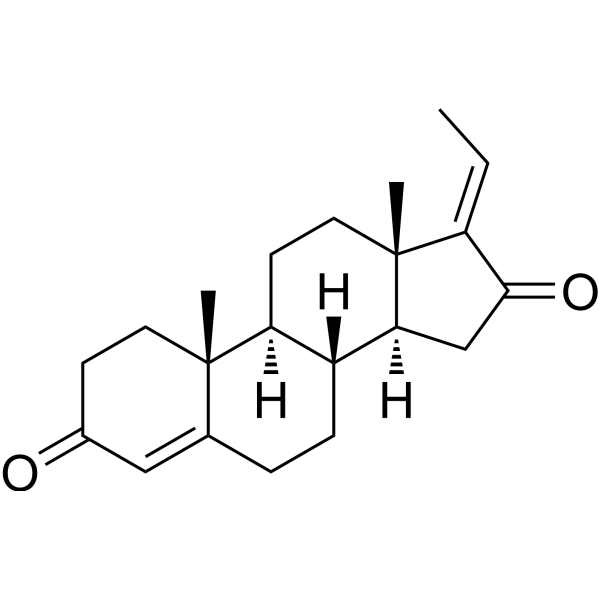 0 ImagesSynonyms: (E)-Guggulsterone(-)-(E)-Guggulsterone ((E)-Guggulsterone) is an orally active natural stereoisomer of Guggulsterone (HY-107738). (-)-(E)-Guggulsterone is an antagonist for the Farnesoid X Receptor (FXR) with an IC50 of 24.06 μM and possesses potent hypolipidemic properties. (-)-(E)-Guggulsterone suppresses dengue virus (DENV) replication by upregulating antiviral interferon responses by inducing HO-1 expression via Nrf2 activation. (-)-(E)-Guggulsterone exhibits antibacterial activities against Bacillus subtilis, Staphylococcus aureus and Pseudomonas aeruginosa. (-)-(E)-Guggulsterone has cardiac protective and antioxidant activities in rats.
-
Dihydrokavain
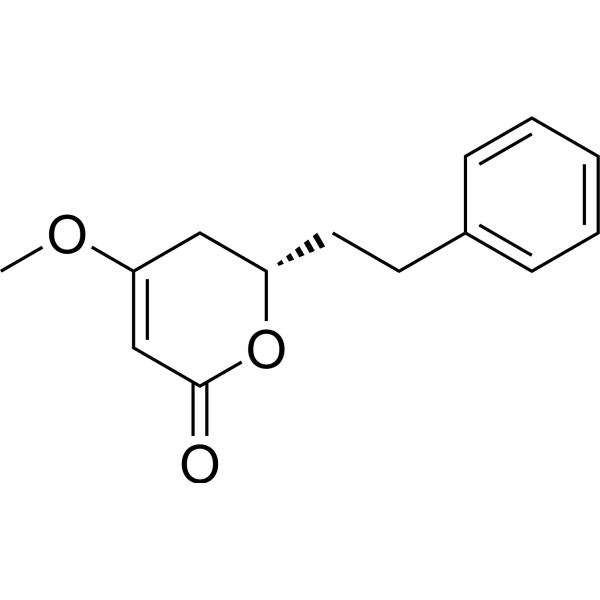 0 ImagesSynonyms: 7,8-Dihydrokawain; 7,8-Dihydrokavain; Marindinin
-
Nivasorexant
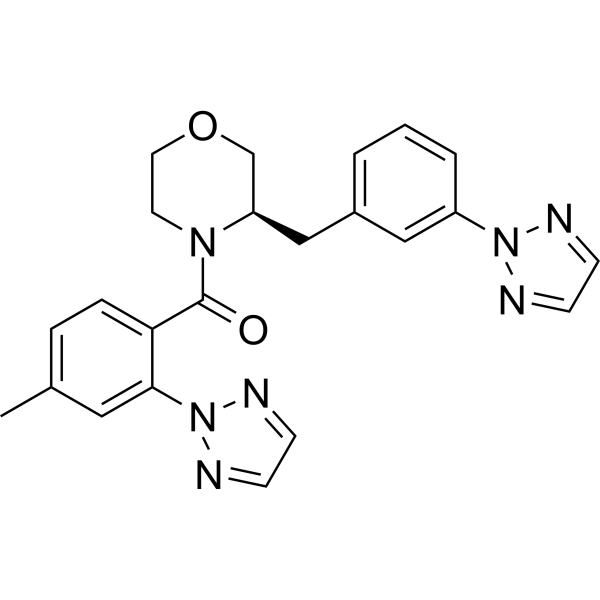 0 ImagesSynonyms: ACT-539313Nivasorexant (ACT-539313) is an orally active, blood-brain barrier penetrant, selective orexin OX1R inhibitor. Nivasorexant specifically blocks central OX1Rs without affecting OX2Rs, and exhibits competitive inhibitory activity against CYP2C8, CYP2C9, CYP2C19 and CYP3A4 (IC50 values are 25 μM, 8.6 μM, 1.6 μM, 19 μM/44 μM, respectively). Nivasorexant significantly reduces binge-like eating behavior of highly palatable food in rat models and has long-acting properties. Nivasorexant shows no relevant off-target activity against over 130 selected proteins, exhibits favorable safety profiles, and can be used for studies related to binge eating disorder.
-
Cloperidone hydrochloride
 0 ImagesCat. No.: HY-164031ACAS No.: 525-26-8
-
Sulfamethylphenazole
 0 ImagesSulfamethylphenazole (Sulfapyrazole; Vesulong) is a long-acting sulfonamide antibacterial agent. Sulfamethylphenazole maintains effective chemotherapeutic blood concentrations through the slow release of free sulfonamide from a protein-binding reservoir and can be used in combination with antibiotics such as Terramycin for bovine hemorrhagic septicemia. Sulfamethylphenazole exhibits moderate antimycobacterial activity against Mycobacterium tuberculosis H37Rv (MIC = 15.38 μg/mL) and inhibitory activity against CYP 2C9. Sulfamethylphenazole can be used in studies related to tuberculosis and hemorrhagic septicemia.
-
BMS-223131
 0 ImagesCat. No.: HY-19397CAS No.: 275375-69-4BMS-223131 (Compound 1) is a potent maxi-K potassium channel opener. BMS-223131 has a strong inhibitory effect on the CYP2C9 enzyme (IC50 = 1.7 μM) and also shows varying degrees of inhibition on other common CYP enzymes such as CYP1A2, CYP2C19, CYP2D6, and CYP3A4. BMS-223131 can enhance the outward current mediated by maxi-K, by promoting K+ efflux to hyperpolarize the cell membrane and reducing Ca2+ influx. BMS-223131 can be used for the research of neurological disease, such as stroke.
-
FGFR2/3-IN-3
 0 ImagesCat. No.: HY-176547CAS No.: 3069945-78-1FGFR2/3-IN-3 is a dual-target FGFR2/3 inhibitor with IC50s of 2.7 nM (TEL-FGFR2) and 3.9 nM (TEL-FGFR3), respectively. FGFR2/3-IN-3 has effective activity against both wild-type and mutant FGFR3. FGFR2/3-IN-3 has low CYP3A4 inhibitory effect and hERG toxicity. FGFR2/3-IN-3 improves the imbalance between chondrocyte proliferation and differentiation and promotes bone growth by inhibiting the signaling pathway mediated by mutant FGFR3. FGFR2/3-IN-3 shows a growth-promoting effect in a dwarfism mouse model and has the potential to study bone development disorder-related diseases such as achondroplasia (ACH).
-
MK-5596
 0 ImagesCat. No.: HY-10575CAS No.: 1044586-68-6MK-5596 is an efficient, selective and orally active CB1R (IC50 = 1.0 nM, EC50 = 5.8 nM) inverse agonist. MK-5596 has weak hERG inhibitory activity. MK-5596 has strong weight loss and appetite suppression effects. MK-5596 has a certain inhibitory effect on CYP enzymes (CYP3A4: IC50 = 3.3 μM, CYP2C8: IC50 = 11 μM, CYP2C9: IC50 = 18 μM, CYP2D6: IC50 = 6 μM). MK-5596 can be used for research on conditions such as obesity.
-
Piperlonguminine (Standard)
 0 ImagesCat. No.: HY-126562RCAS No.: 5950-12-9Piperlonguminine (Standard) is the analytical standard of Piperlonguminine (HY-126562). This product is intended for research and analytical applications. Piperlonguminine is a cytochrome P450 (CYP450) inhibitor. Piperlonguminine also inhibits the growth of epimastigotes and intracellular amastigotes of Trypanosoma cruzi, with IC50 values of 53.8 and 33.9 μM, respectively. Piperlonguminine regulates HMGB1/TLR4-NF-κB/MAPK-related inflammatory responses, endothelial protein C receptor (EPCR) shedding, melanogenesis, glycolipid metabolism, ischemic brain injury and tumor growth. Piperlonguminine can be used in research on hyperlipidemia, sepsis, Chagas disease, ischemic stroke, sarcoma and severe acute pancreatitis-associated lung injury.
-
Sulfamethylphenazole potassium
 0 ImagesCat. No.: HY-105828BCAS No.: 18179-68-5Synonyms: Sulfapyrazole potassium; Vesulong potassiumSulfamethylphenazole potassium (Sulfapyrazole potassium; Vesulong potassium) is a long-acting sulfonamide antibacterial agent. Sulfamethylphenazole potassium maintains effective chemotherapeutic blood concentrations through the slow release of free sulfonamide from a protein-binding reservoir and can be used in combination with antibiotics such as Terramycin for bovine hemorrhagic septicemia. Sulfamethylphenazole potassium exhibits moderate antimycobacterial activity against Mycobacterium tuberculosis H37Rv (MIC = 15.38 μg/mL) and inhibitory activity against CYP 2C9. Sulfamethylphenazole potassium can be used in studies related to tuberculosis and hemorrhagic septicemia.
-
10-Hydroxywarfarin
 0 Images10-Hydroxywarfarin, a metabolite of (R)-(+)-Warfarin (HY-W015998 ), is a CYP2C9 and vitamin K epoxide reductase complex 1 (VKOR) inhibitor with IC50s of 1.6 µM and 80 ng/mL, respectively.
-
NNRT-IN-10
 0 ImagesCat. No.: HY-174417CAS No.: 2459751-62-1NNRT-IN-10 is a potent, selective and orally active non-nucleoside HIV-1 reverse transcriptase (NNRTI) inhibitor with with an EC50 values ranging from 1.16 to 18.3 nM for HIV and its mutant strains. NNRT-IN-10 exhibits good pharmacokinetic properties and favorable safety profiles. NNRT-IN-10 can be used for the study of AIDS, caused by HIV-1.
-
8-Hydroxywarfarin
 0 ImagesCat. No.: HY-W739842CAS No.: 17834-04-7Synonyms: 8-OH Warfarin8-Hydroxywarfarin (8-OH Warfarin) is a CYP2C9 inhibitor. 8-Hydroxywarfarin inactivates the anticoagulant activity of Warfarin (HY-B0687) via 8-hydroxylation. 8-Hydroxywarfarin serves as a glucuronidation substrate for UGT1A1, UGT1A8, UGT1A9, as well as wild-type/mutant UGT1A10. This reaction enhances its polarity, solubility and excretion efficiency, and the process is independent of phenylalanine90 of UGT1A10. 8-Hydroxywarfarin can be used in studies related to thromboembolic diseases.
-
Sulfamethylphenazole sodium
 0 ImagesCat. No.: HY-105828ACAS No.: 18179-65-2Synonyms: Sulfapyrazole sodium; Vesulong sodiumSulfamethylphenazole sodium (Sulfapyrazole sodium; Vesulong sodium) is a long-acting sulfonamide antibacterial agent. Sulfamethylphenazole sodium maintains effective chemotherapeutic blood concentrations through the slow release of free sulfonamide from a protein-binding reservoir and can be used in combination with antibiotics such as Terramycin for bovine hemorrhagic septicemia. Sulfamethylphenazole sodium exhibits moderate antimycobacterial activity against Mycobacterium tuberculosis H37Rv (MIC = 15.38 μg/mL) and inhibitory activity against CYP 2C9. Sulfamethylphenazole sodium can be used in studies related to tuberculosis and hemorrhagic septicemia.

-
4-Methoxywarfarin
 0 ImagesCat. No.: HY-184843CAS No.: 38063-51-34-Methoxywarfarin (compound 15) is a racemic inhibitor of cytochrome P450 2C9 (CYP2C9). 4-Methoxywarfarin inhibits CYP2C9-catalyzed S-warfarin 7-hydroxylation with a Ki of 11 μM. 4-Methoxywarfarin is applicable to studies related to CYP2C9 inhibition, warfarin metabolism, and the structure-activity relationship of CYP2C9 inhibitors.
- 1



